Start seeds too early and you end up with tall, weak seedlings waiting by the window for weeks. Start too late and your tomatoes ripen just as the first fall frost arrives. The right timing comes from one date: your average last spring frost. Here is how to turn it into a seed-starting calendar.
Step 1: Find your last frost date
Your last frost date is the average date of the last light freeze in spring where you live. Look it up for your town or zip code with your county Cooperative Extension office or NOAA climate data.
Zone is not the same as frost date. USDA hardiness zones are based on the coldest winter temperatures. They tell you which perennials survive the winter, not when spring frosts end. Two towns in the same zone can have last frost dates weeks apart. Zones are a useful starting point; your local frost date is better.
Remember that the "average" last frost still has a real chance of a later frost. Tender plants such as tomatoes and peppers are safest planted out a week or two after it.
Step 2: Count back the weeks
Seed packets say things like "start indoors 6 to 8 weeks before last frost". Here are typical ranges for common vegetables:
- Onions and leeks: 10 to 12 weeks before last frost.
- Peppers and eggplant: 8 to 10 weeks before.
- Tomatoes: 6 to 8 weeks before.
- Broccoli, cabbage, cauliflower, kale: 6 to 8 weeks before. These handle cool weather and go out 2 to 4 weeks before last frost.
- Lettuce: 4 to 6 weeks before.
- Basil: 6 to 8 weeks before.
- Cucumbers, squash, melons: 3 to 4 weeks before, in large pots because they dislike root disturbance, or sow them directly outside once the soil is warm.
Example: if your last frost date is May 1, start onions in early to mid February, peppers in late February or early March, tomatoes in mid March, and cucumbers in early April.
Always check the seed packet too: varieties differ.
What to sow directly in the garden
Some crops grow better sown straight into the soil:
- Peas and spinach: as soon as the soil can be worked, often 4 to 6 weeks before last frost.
- Radishes, carrots, beets, turnips: from 2 to 4 weeks before last frost; root crops dislike transplanting.
- Beans and corn: after last frost, when the soil has warmed.
- Squash, cucumbers, melons: after last frost in warm soil, if you did not start them inside.
Give seedlings what they need
- Warmth to germinate. Most warm-season seeds sprout fastest at about 70 to 80°F soil temperature; a seedling heat mat helps.
- Strong light. A sunny window is rarely enough in late winter. Simple LED shop lights kept close above the seedlings for 14 to 16 hours a day prevent tall, leggy stems. Raise them as plants grow.
- Gentle air movement. A small fan or brushing the tops with your hand builds sturdier stems.
- Water from below and let the surface dry slightly between waterings to avoid damping off.
- Pot up when the first true leaves appear and roots fill the cell.
Harden off before planting out
Seedlings raised indoors need about 7 to 10 days to adjust to sun, wind and cooler nights:
- Start with an hour or two outside in a sheltered, shady spot.
- Add time and sun each day.
- Bring them in if a frost or a cold night is forecast.
- By the end of the week they can stay out overnight.
Plant out on a cloudy day or in the evening, and water well.
Plan a fall garden too
Count back from your first fall frost date to plant a second crop of broccoli, kale, lettuce, carrots and peas. Add the days to harvest from the seed packet, plus about two weeks because growth slows as days shorten.
Your calendar, already worked out
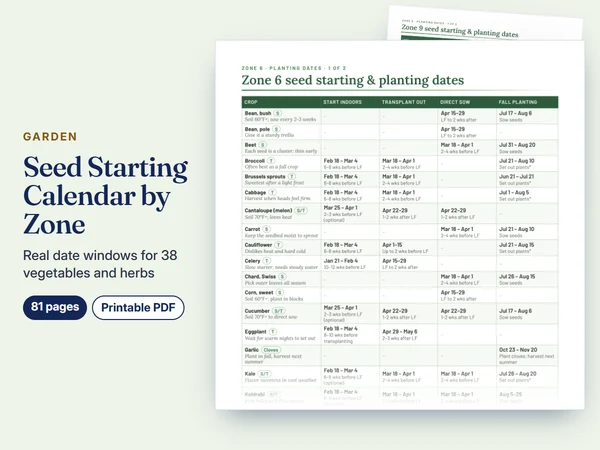
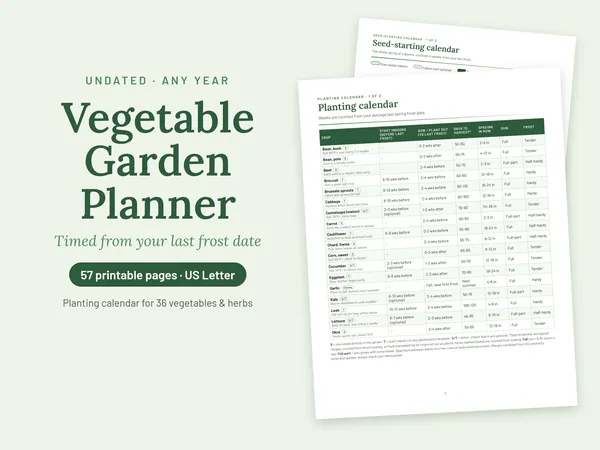
Our Seed Starting Calendar by Zone gives real date windows to start indoors, transplant, direct sow and plant for fall for 38 vegetables and herbs, in one PDF per zone from 3 to 10, plus worksheets to adjust them to your own frost date. For the whole season, the undated Vegetable Garden Planner turns your frost dates into a planting schedule and adds bed layouts, crop rotation, a seed inventory and harvest logs.