Self-Employed, Taxes & Mileage
Income and expense trackers, quarterly estimated tax planners, IRS-ready mileage logs, 1099 contractor payment tracking and a UK sole trader record keeper for freelancers and the self-employed.
-
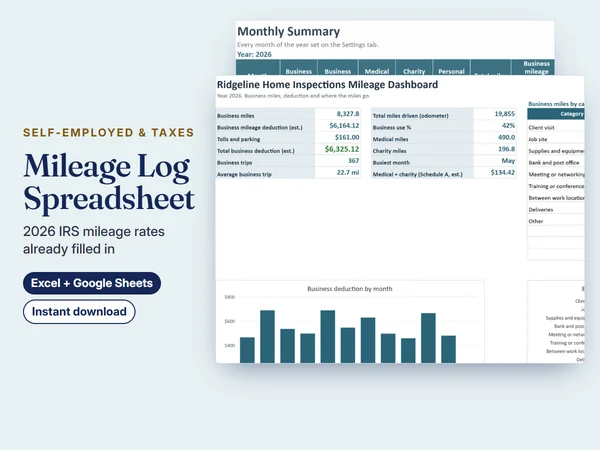 Mileage Log Spreadsheet
Log trips once and see business miles and deduction add up.
-
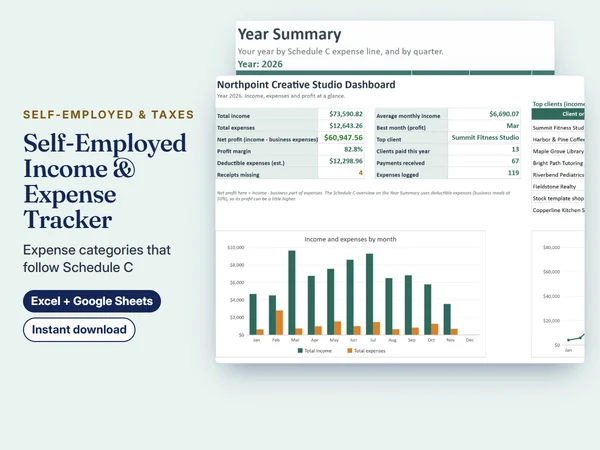 Self-Employed Income & Expense Tracker
Income, expenses and monthly profit and loss by Schedule C line.
-
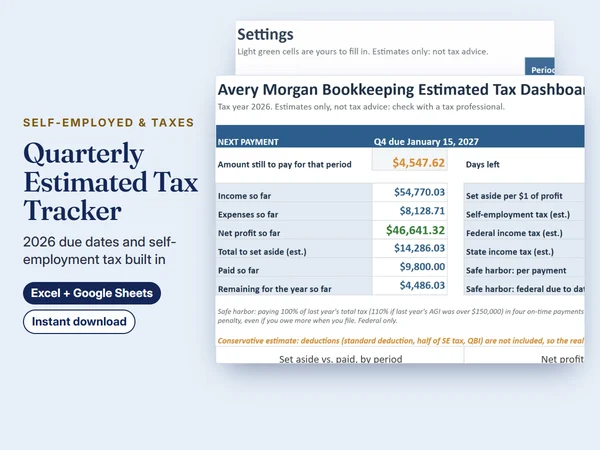 Quarterly Estimated Tax Tracker
What to set aside and pay for each estimated tax due date.
-
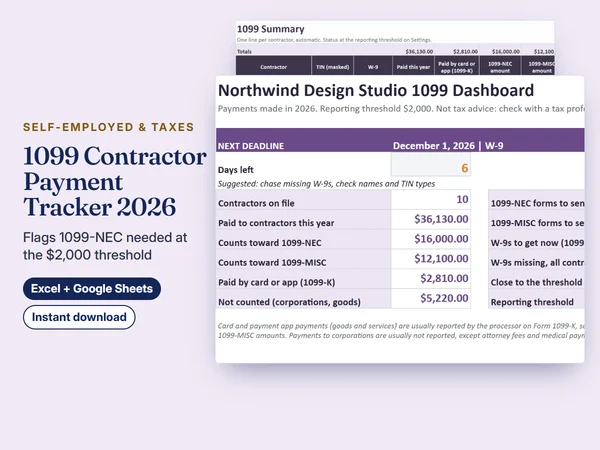 1099 Contractor Payment Tracker 2026
Log contractor payments and see who needs a 1099 at the $2,000 threshold.
-
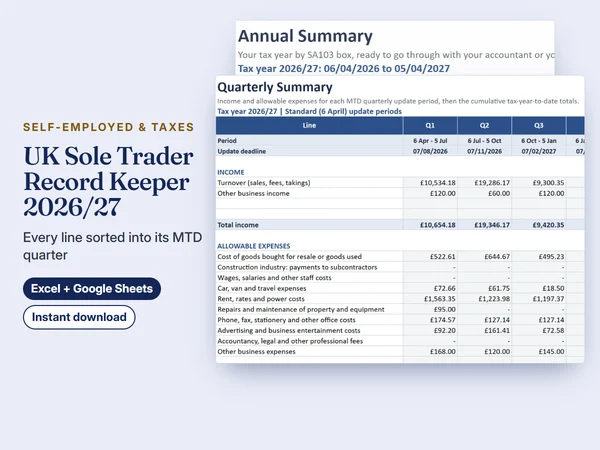 UK Sole Trader Record Keeper 2026/27
Income, expenses and mileage by quarter and SA103 box. UK tax year, £ amounts.
Self-Employed, Taxes & Mileage: buying guide
Most of these templates are for freelancers, independent contractors and sole proprietors in the US who keep their own books; one is made for sole traders in the UK. They cover the records the self-employed most often need: income and expenses, quarterly estimated taxes, business mileage and payments to contractors.
The Self-Employed Income & Expense Tracker sorts every expense into categories that follow the expense lines of Schedule C, with a business-use percentage for shared costs like a phone. It builds a monthly profit and loss and a year summary by Schedule C line.
The Quarterly Estimated Tax Tracker adds up income and expenses for each IRS payment period and estimates what to set aside: self-employment tax plus the income tax rates you choose. It logs every payment and shows your next due date and what is left to pay. A Notes & Sources tab lists where each rate and date comes from.
The Mileage Log Spreadsheet records each trip once and calculates the deduction at the IRS standard rate for the trip date. The 2026 rates are already filled in, including the rate change on July 1, 2026.
The 1099 Contractor Payment Tracker 2026 is for business owners who pay independent contractors. It logs each payment with its method, keeps each contractor's Form W-9 details and status, adds up each contractor's year and flags who reaches the $2,000 reporting threshold for payments made in 2026. Card and payment app payments are shown apart, since the processor usually reports them on Form 1099-K. A Deadlines tab lists the dates to send and file the forms.
The UK Sole Trader Record Keeper 2026/27 follows the UK tax year, 6 April to 5 April, with amounts in pounds. It sorts income, expenses and mileage into quarters, totals expenses by SA103 box and lays out quarterly and annual figures for your accountant or your Making Tax Digital software. It is a record keeper, not MTD software: it does not connect to HMRC or send anything.
Each template has a filled-in example and a blank copy, and opens in Google Sheets. Use the example to see how the tabs connect, then enter your year and settings in the blank copy. Log as you go: a few minutes a week is easier than a pile of receipts in April.
The trackers do the arithmetic, not the tax advice. Check your final figures with a tax professional.
Common questions
Which tax year do these templates cover?
The US templates cover 2026: the quarterly estimated tax tracker has the 2026 due dates and self-employment tax figures, the mileage log has the 2026 IRS standard mileage rates, and the 1099 tracker has the 2026 threshold and deadlines, all on their Settings tab. The UK record keeper covers the 2026/27 UK tax year.
What does the mileage log record for each trip?
Date, vehicle, trip type, category, destination and business purpose, with miles from odometer readings, typed miles or a saved route. Tolls and parking have their own column.
Does the UK record keeper send my updates to HMRC?
No. It keeps and totals your records. To send Making Tax Digital updates you need separate software that links to your spreadsheet, or an accountant who files for you.
Is this tax advice?
No. The templates organize your own numbers and do the math. Check the results with a tax professional before you file or pay.