Home blood pressure readings give your doctor a much better picture than a single reading at the office, where nerves, rushing and talking can push the numbers up. But home readings are only useful if they are taken the right way and written down clearly. Here is how.
This guide explains how to measure and record readings. It is not medical advice: ask your doctor or nurse what your numbers mean and what to do about them.
Choose the right monitor
- Upper-arm cuff, automatic. Upper-arm monitors are generally recommended over wrist and finger models, which are more sensitive to position.
- Validated for accuracy. In the US, you can check whether a model has been independently tested on validatebp.org.
- The right cuff size. A cuff that is too small reads too high; too big, too low. Measure around the middle of your upper arm and compare with the range printed on the cuff. Many people need a large cuff.
- Bring it to your appointment once, so your clinic can compare it with their own device.
Before you measure
For 30 minutes before a reading, avoid caffeine, exercise and smoking. Use the bathroom first: a full bladder raises the numbers. Then sit quietly for 5 minutes.
The right position
- Sit in a chair with your back supported, not on a sofa or bed.
- Feet flat on the floor, legs uncrossed.
- Rest your arm on a table so the cuff is at the level of your heart.
- Put the cuff on bare skin, not over a sleeve. The bottom edge sits just above the bend of the elbow.
- Stay still and do not talk during the reading.
Use the same arm every time, unless your doctor tells you otherwise.
When and how often
A common routine is to measure twice a day, morning and evening:
- Morning: before breakfast and before taking medicines, unless you have been told differently.
- Evening: at about the same time each day.
- Take two or three readings, one minute apart, and write them all down.
Your doctor may ask you to do this every day for a week before an appointment, or after a change in medication. Follow their plan if it differs.
How to write a reading down
Each reading has three numbers:
- Systolic (top number, in mmHg): the pressure when the heart beats.
- Diastolic (bottom number, in mmHg): the pressure between beats.
- Pulse (beats per minute).
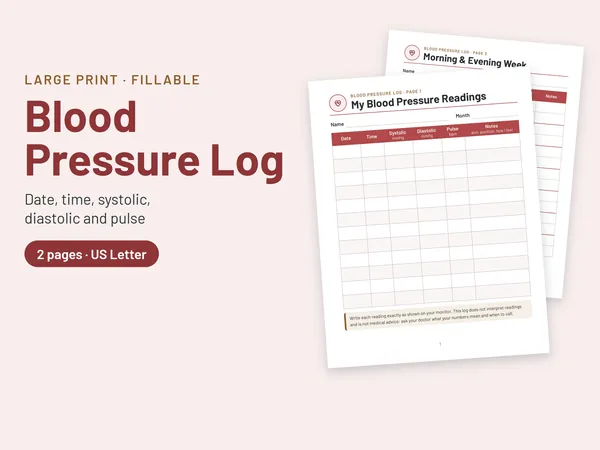
Record the date, time, all three numbers and which arm. Use the notes column for anything that might matter: a missed dose, a headache, a bad night's sleep, a very stressful day. Do not round numbers or leave out readings that look odd: your doctor needs the full picture.
Many monitors store readings in memory, but a paper log is easier to bring, read and discuss, and you can see patterns at a glance.
What the numbers mean
The American Heart Association groups adult readings into ranges, from normal (below 120/80 mmHg) through elevated and two stages of high blood pressure. Your doctor will interpret your readings based on your health, your average over time and your other conditions, not one number.
One thing to know: if a reading is higher than 180/120, wait a minute and measure again. If it is still that high, contact your doctor right away. If you also have symptoms such as chest pain, shortness of breath, back pain, numbness or weakness, a change in vision or difficulty speaking, call 911.
Common mistakes
- Measuring right after coffee, a walk or climbing stairs.
- A cuff over clothing, or the wrong cuff size.
- Arm hanging down or held up without support.
- Talking, looking at your phone or watching an exciting program during the reading.
- Taking one reading only and keeping the "best" one.
Keep everything together
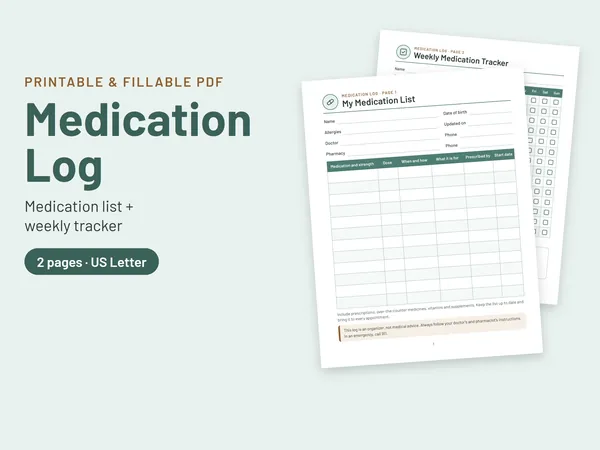
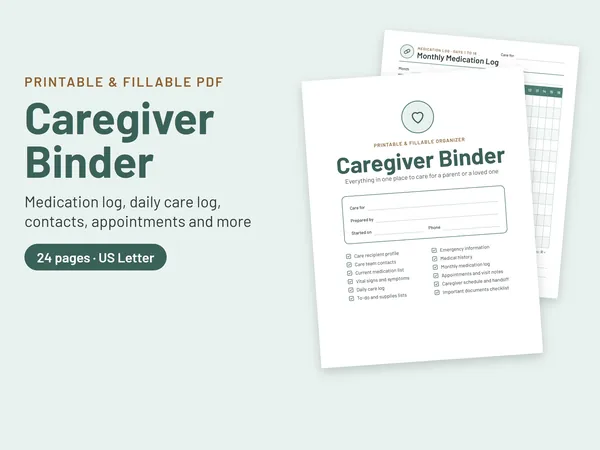
Our printable Blood Pressure Log has large print and roomy boxes for date, time, systolic, diastolic, pulse and notes, plus a week page with a morning and evening row for each day. It comes as a fillable PDF and a print-and-write version. To track medicines in the same folder, use the Medication Log, and if you look after a parent or partner, the Caregiver Binder keeps health records, contacts and appointments in one place.