"Calligraphy" covers dozens of scripts, from medieval book hands to the bouncy lettering on a birthday card. Each one is written with a particular tool, and the tool decides most of the look. Here are the main types of calligraphy, grouped by pen, with an honest note on how hard each one is and where to learn it.
How calligraphy styles are grouped
- Broad-edge scripts use a flat nib or chisel marker held at a fixed angle. Thick and thin lines come from the direction of the stroke.
- Pointed-pen scripts use a flexible pointed nib. Thick and thin lines come from pressure.
- Brush scripts use a brush or brush pen. Pressure again, with a softer, more modern look.
- Non-Latin traditions such as Arabic and Chinese calligraphy have their own tools and rules.
Broad-edge scripts
1. Roman capitals. The classical capitals of ancient Rome, built on the square and the circle. Calm, formal and the base of most other alphabets. Difficulty: medium. See Roman capitals calligraphy.
2. Foundational hand. A round, upright lowercase developed by Edward Johnston as a teaching script. Difficulty: easy. A great first broad-edge hand.
3. Uncial. The round, open lettering of early Irish manuscripts, with one case only. Difficulty: easy. See uncial calligraphy.
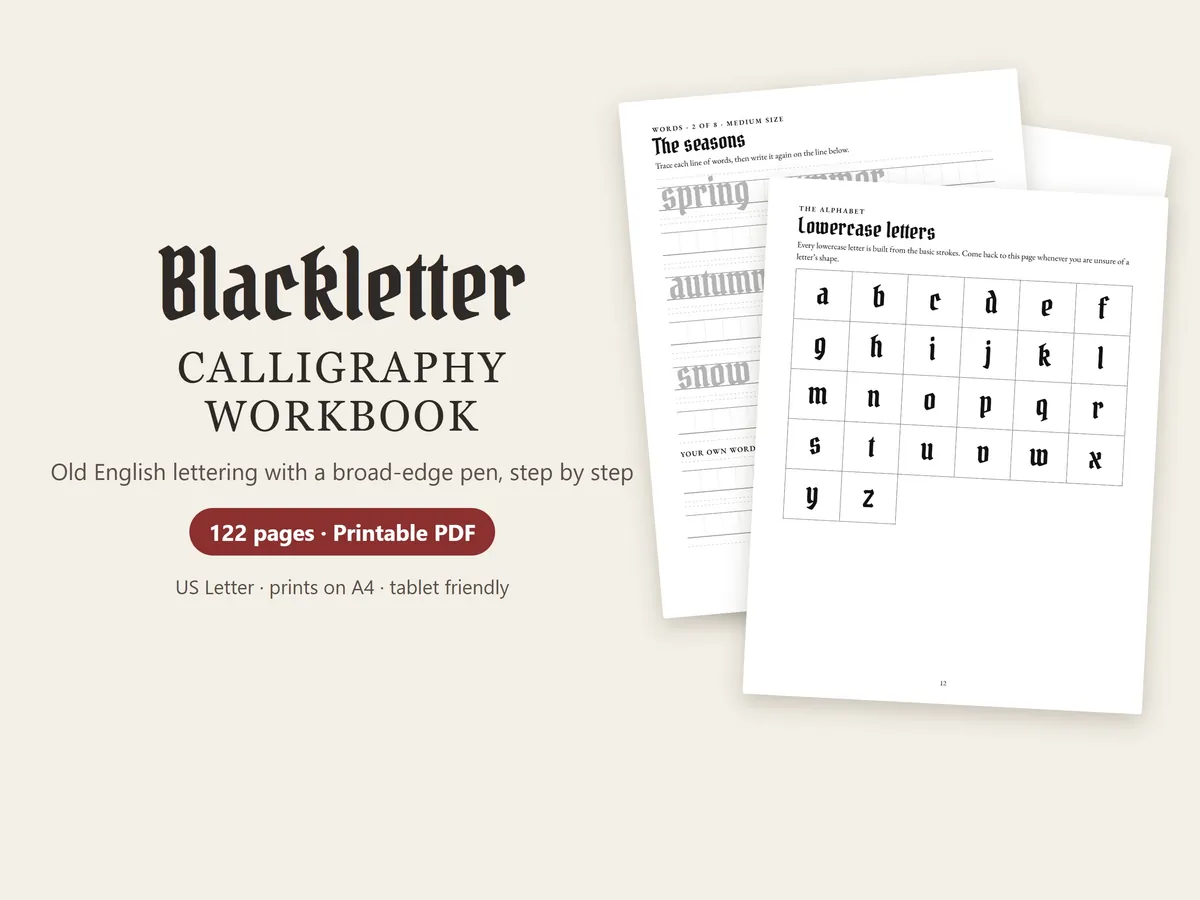
4. Blackletter. Also called Old English lettering: dense, angular and dramatic, for certificates and headings. Difficulty: medium. See blackletter for beginners.
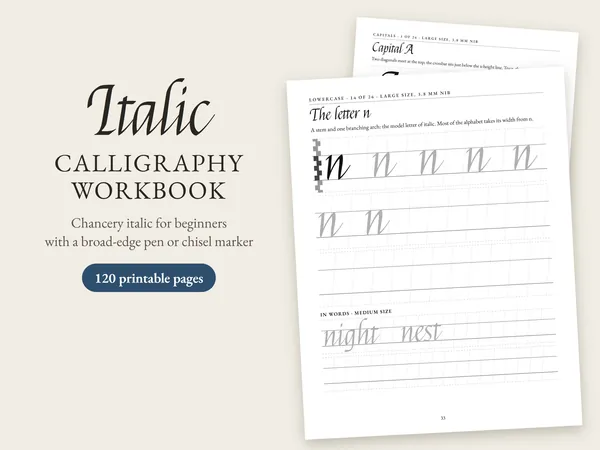
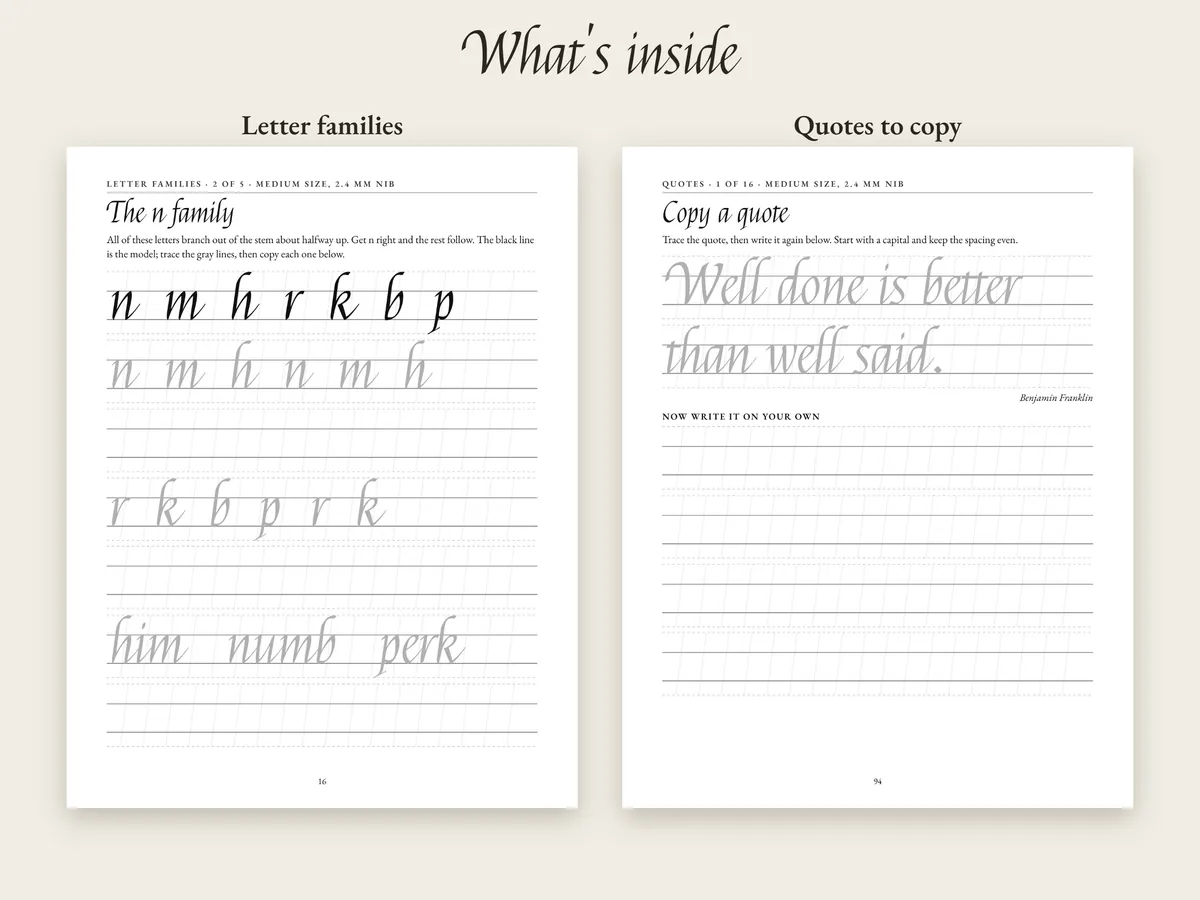
5. Italic. The Renaissance chancery hand: slightly sloped, compressed and quick to write. The most practical broad-edge script. Difficulty: easy to medium. See italic calligraphy for beginners.
Pointed-pen scripts
6. Copperplate. The elegant 18th-century English roundhand: 55-degree slant, hairlines and swelling shades. Difficulty: medium to hard, because of the dip pen. See copperplate for beginners.
7. Spencerian. The 19th-century American business hand, lighter than copperplate, with fine ovals. Difficulty: hard.
8. Modern calligraphy. Pointed-pen or brush lettering with relaxed rules: varied sizes, loose slant and a bouncing baseline. Difficulty: easy to start, takes time to master.
Brush and marker styles
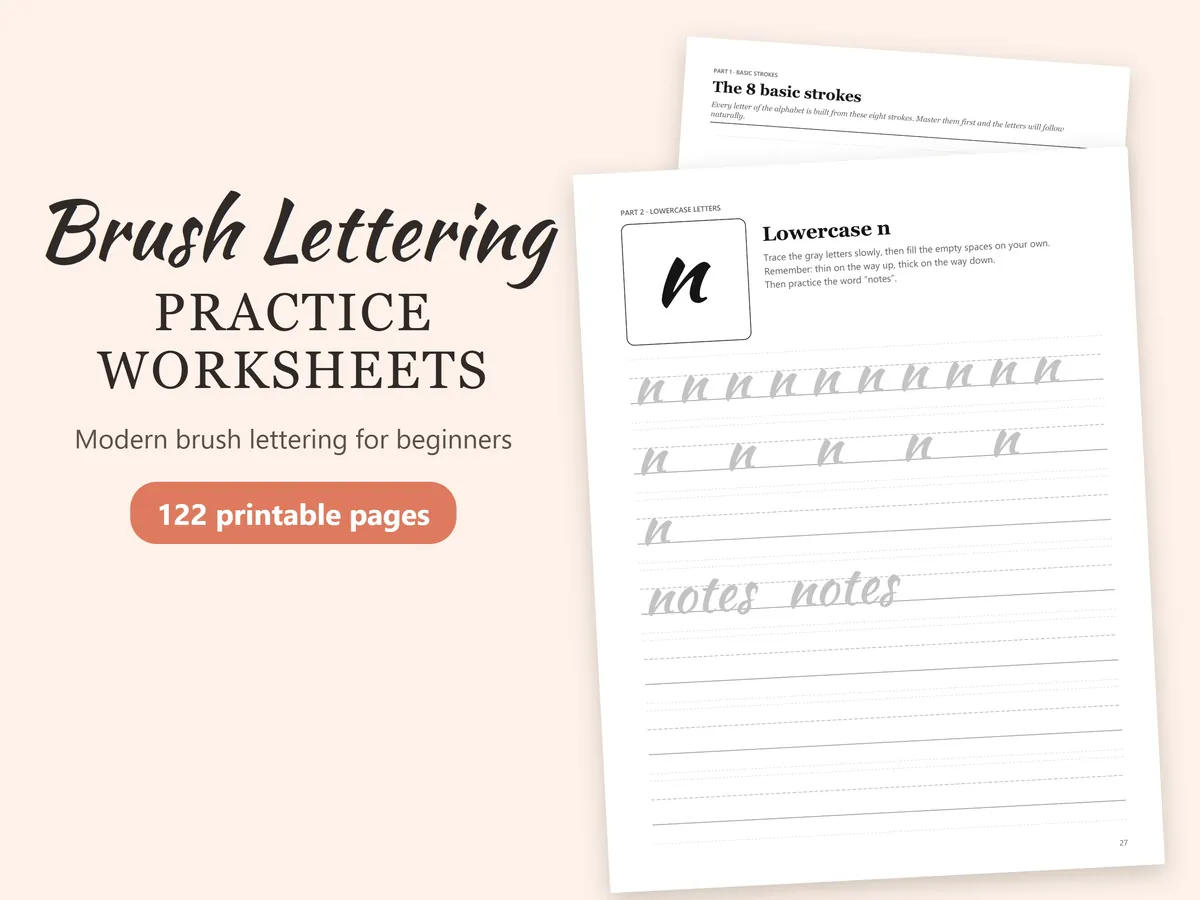
9. Brush lettering. Modern script made with a brush pen: thick downstrokes, thin upstrokes. The most popular style for cards and journals. Difficulty: easy. See brush lettering for beginners and bounce lettering.
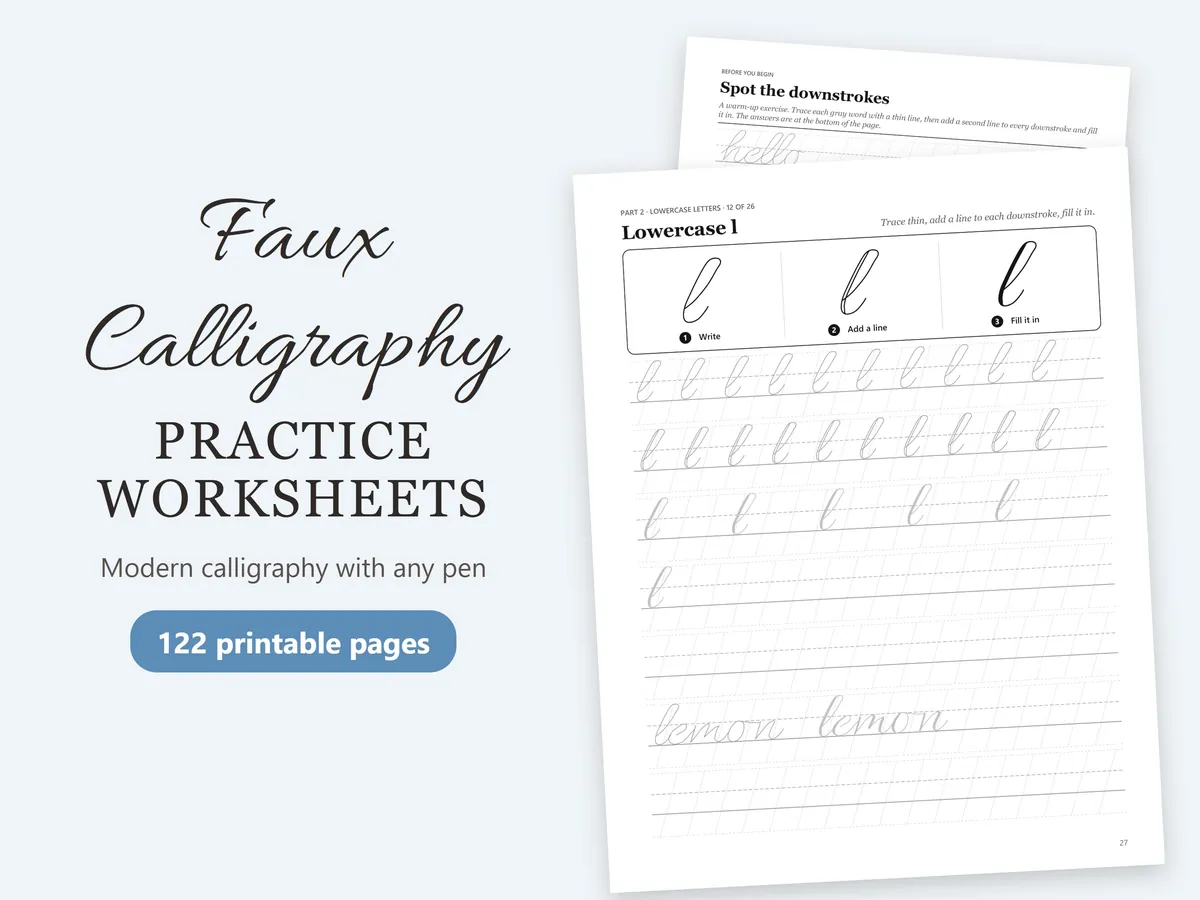
10. Faux calligraphy. The calligraphy look made with any pen, by drawing the thick lines in by hand. Difficulty: very easy. See faux calligraphy.
Arabic and Chinese calligraphy
11. Arabic calligraphy. Written right to left with a qalam or chisel marker and measured in dots. Beginners usually learn Naskh (clear and classic) or Ruqah (everyday and quick); Thuluth, Diwani and Kufic come later. Difficulty: medium. See Arabic calligraphy for beginners.
12. Chinese calligraphy. Characters written with a brush, built from eight basic strokes in a fixed order. Beginners start with regular script (kaishu). Difficulty: medium. See Chinese calligraphy for beginners.
Which calligraphy style should you learn first?
- You want to start today with what you have: faux calligraphy.
- You like the modern card-and-journal look: brush lettering, then bounce lettering.
- You want a beautiful everyday hand: italic.
- You love the classic wedding-invitation look: copperplate, after a few weeks of brush or faux to learn thick and thin.
- You want something bold for headings and certificates: blackletter or uncial.
- You are drawn to another culture's writing: Arabic or Chinese calligraphy, ideally after learning the alphabet or a few characters.
Whatever you choose, the method is the same: learn the basic strokes, then letters in families, then words. Our guide to calligraphy practice sheets explains guidelines, x-height and slant for any script.
Workbooks for every style
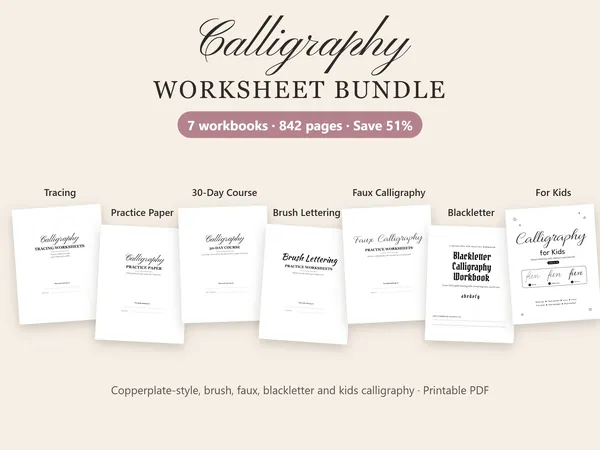
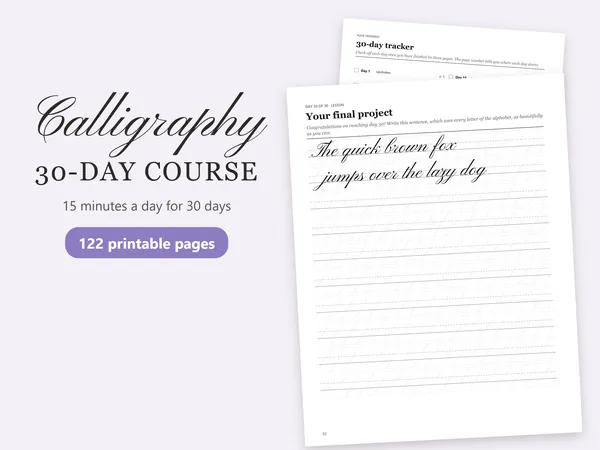
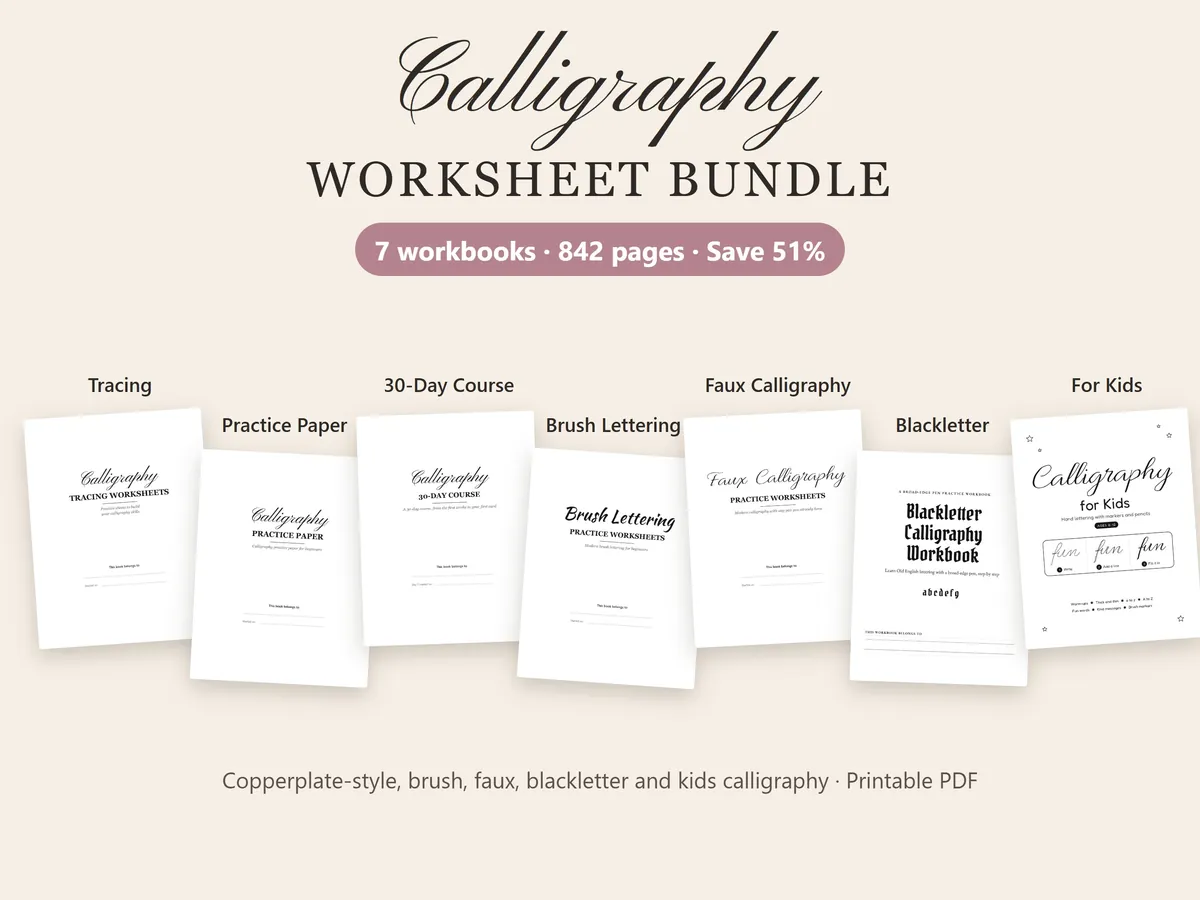
Every style above has a printable workbook in our calligraphy and lettering collection, with gray models to trace and blank guidelines to write on your own. If you are not sure yet, the 30-Day Calligraphy Course takes you from your first strokes to full words in 15-minute sessions, and the 7-workbook Calligraphy Bundle lets you try brush, faux, blackletter and more before you pick a favorite.