Learning a new writing system is the first real milestone in a new language. Until you can read the script, you depend on romanized spellings that often mislead your pronunciation. Once you can read it, every sign, menu and label becomes practice.
The good news: alphabets are small. Even the "hard" ones on this list can be learned in a few weeks with daily practice. Here is how four popular scripts compare for English speakers, and how to learn any of them faster.
Korean Hangul: the easiest to learn
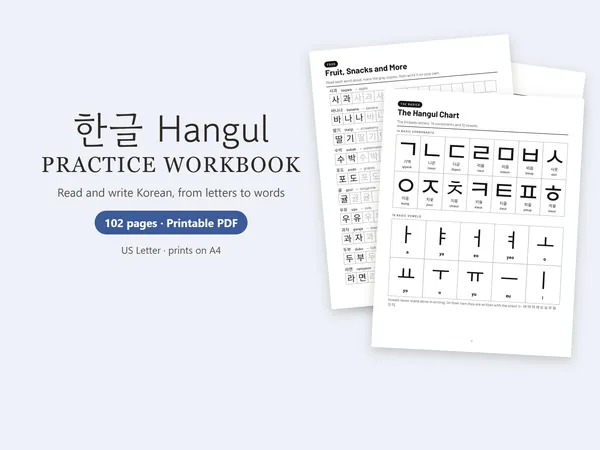
Hangul is often called the most logical alphabet in the world, and it earns the title. It was designed on purpose in the 15th century to be easy to learn.
- Letters: 14 basic consonants and 10 basic vowels, plus a few doubled consonants and combined vowels.
- What makes it easy: the shapes are systematic. Consonants were drawn to suggest the position of the mouth and tongue, and related sounds have related shapes. Vowels are built from simple vertical and horizontal lines.
- What is tricky: letters are grouped into square syllable blocks, so 한 is one block made of three letters (h, a, n). It takes a day or two to get used to reading block by block. Some consonants have sounds that do not exist in English.
- Time to read: many learners can sound out Hangul within a few days and read comfortably within two weeks.
Japanese hiragana and katakana: easy, but twice
Japanese uses three scripts together. Beginners start with the two syllabaries, hiragana and katakana, before kanji (Chinese characters).
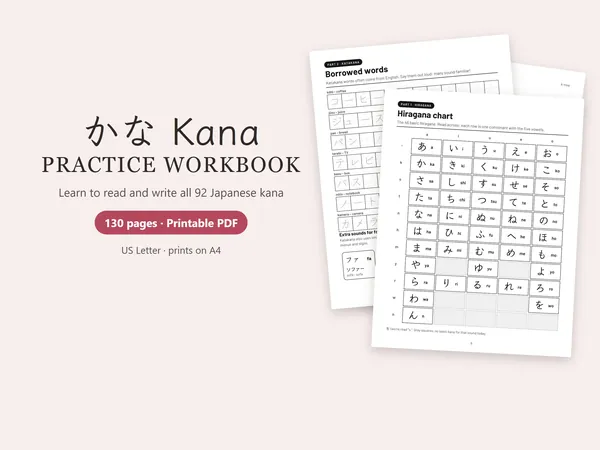
- Characters: 46 basic hiragana and 46 basic katakana. Each one stands for a syllable, like ka, shi or mo, not a single sound.
- What makes it easy: pronunciation is very regular. Once you know a character, it always sounds the same. Japanese has only five vowel sounds.
- What is tricky: you are really learning two sets. Hiragana is rounded and used for grammar and native words; katakana is angular and used for foreign words and emphasis. Some katakana look alike (シ shi and ツ tsu, ソ so and ン n) and need careful stroke order to tell apart.
- Time to read: hiragana in one to two weeks, katakana in another one to two weeks. Kanji is a longer journey.
Stroke order matters more in Japanese than in the other scripts here: it makes characters look right and it makes handwriting and fast writing readable. Learn it from the start.
Russian Cyrillic: familiar, with traps
Cyrillic is used for Russian, Ukrainian, Bulgarian, Serbian and other languages. The Russian version has 33 letters.
- What makes it easy: several letters look and sound like their English counterparts (А, К, М, О, Т), and it is an alphabet in the strict sense, one letter per sound, mostly.
- What is tricky: the "false friends". Р is an r, В is a v, Н is an n and С is an s. Your brain will read them as English letters for a while. A few letters are new shapes entirely (Ж, Ш, Щ, Ы).
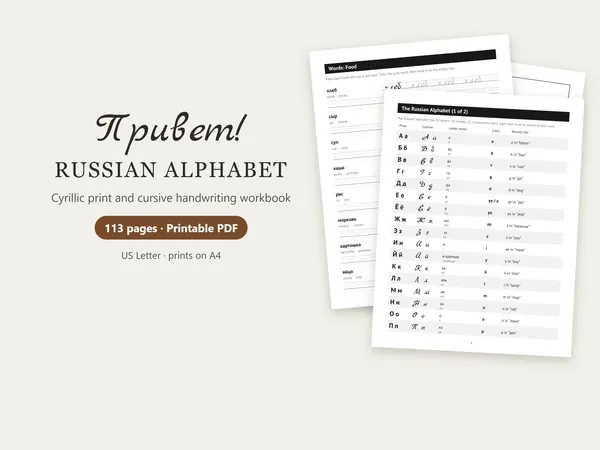
- The handwriting surprise: Russian cursive looks quite different from printed Cyrillic. Handwritten т looks like an English m, and д often has a tail like a g. If you want to read handwritten notes or write by hand yourself, practice cursive separately.
- Time to read: one to two weeks for print, a little longer for cursive.
Arabic: the most new habits, very learnable
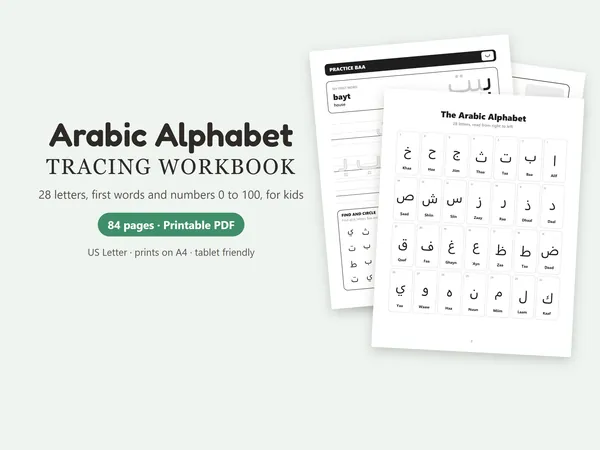
Arabic script is used for Arabic and, with extra letters, for languages such as Persian and Urdu. The Arabic alphabet has 28 letters.
- What makes it learnable: there are only 28 letters, and many share the same basic shape, told apart by dots above or below (ب b, ت t, ث th). Learn one shape and you have learned a family.
- What is tricky: three new habits at once. Arabic is written right to left. Most letters change shape depending on whether they are alone or at the beginning, middle or end of a word. And six letters (ا د ذ ر ز و) never join the letter after them, which creates gaps inside words. Short vowels are usually not written in everyday text, though learner materials show them as small marks.
- Time to read: two to four weeks to recognize all letters in all their forms; reading fluently takes longer because of the missing short vowels.
So, which is the easiest alphabet to learn?
For most English speakers, the ranking looks like this:
- Korean Hangul: systematic, small, fast to learn.
- Russian Cyrillic: familiar shapes, with a few false friends and a separate cursive.
- Japanese hiragana and katakana: each set is easy, but there are two, and stroke order counts.
- Arabic: few letters, but right-to-left writing and joined, shape-changing letters take more practice.
Honestly, the "easiest" alphabet is the one for the language you want to learn. Any of them can be read within a month.
How to learn any new alphabet faster
- Write it by hand. Writing a letter engages your memory far more than looking at it. Tracing a model, then copying it on your own, is the fastest way to make shapes stick.
- Learn in small groups. Five to eight letters per session, then review the old ones before adding new ones.
- Say each sound aloud as you write. You are building a link between shape, sound and movement.
- Read real words early. As soon as you know a few letters, read words made of them: names, places, menu items, brand names.
- Use similar-looking pairs on purpose. Put look-alikes side by side (シ and ツ, Р and P, ب and ت) and practice telling them apart.
- Review daily, briefly. Ten minutes a day for three weeks beats three hours on one weekend.
Practice workbooks for each script
We make printable tracing workbooks for each of these alphabets, designed for English speakers: Korean Hangul Practice Workbook, Hiragana & Katakana Practice Workbook, Russian Cyrillic Handwriting Workbook (print and cursive) and the Arabic Alphabet Tracing Workbook, which shows every letter in all four of its forms with an English sound hint and a first word.